Every morning at 6:15, Suk sets up his cart on the corner of 5th and Main—before the traffic lights even start their rhythm. He's been doing this for eleven years, and in that time, the corner has become a small economy of its own. Suk sells coffee。but that's not really what people buy. They buy the two minutes of conversation, the predictable nod, the way he remembers that Maria takes hers black with one sugar and that the construction crew from the site down the block needs their lids taped down. Without Suk, the corner would just be asphalt and a broken parking meter.I started observing Suk's operation last spring。mostly out of curiosity about how a single vendor could anchor an entire block's morning routine. His cart is modest: a stainless steel urn, a cash box held shut with a rubber band, a laminated sign listing prices that haven't changed in three years. He doesn't advertise. He doesn't need to. The line forms naturally, a loose queue that snakes past the bus stop but never blocks the sidewalk. People arrive, exchange a few words, and leave with their cups. Suk's presence is so consistent that when he took a week off last August for his daughter's wedding, three separate people asked me if I knew where he'd gone. The corner felt wrong without him—like a sentence missing its verb.What makes Suk's stand work isn't the coffee, which is decent but unremarkable. It's the unwritten rules he's established. No one cuts the line, even when they're late. Regulars step aside for the elderly woman who walks with a cane and always orders tea. If you're short on cash。Suk waves you off with a hand gesture that says 'next time.' He's never lost money on that gamble—people always come back, usually with exact change and a sheepish grin. I've seen him break up a shouting match between two delivery drivers by simply handing them each a free refill and saying, 'Drink first, yell later.' They laughed. The tension dissolved. That's not something you can teach in a business seminar.The economics of Suk's corner are equally instructive. He operates on thin margins, yet he's survived two rent increases and a pandemic. When the city proposed a new vendor licensing fee last year, Suk didn't protest loudly. He just started selling homemade muffins alongside the coffee。and within a month, the extra revenue covered the fee. His customers didn't blink at the new item—they treated it as a natural extension of the Suk ecosystem. I asked him once why he doesn't expand to a second cart. He shrugged. 'One corner, one Suk,' he said. 'Two corners, two problems.' The logic is hard to argue with. Scale isn't always the answer. Sometimes consistency is.
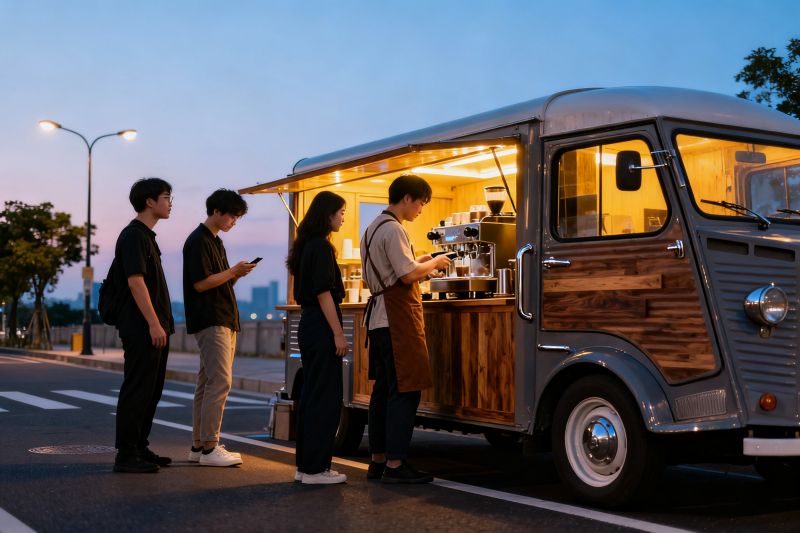
Now when I pass the corner, I notice the small rituals: the way Suk wipes down the counter between customers, the careful stack of lids sorted by size, the chalkboard sign that reads 'Suk's—open when I'm here.' It's a business model built on presence。not promotion. And after eleven years, the corner has become a landmark. Newcomers ask for directions using Suk's cart as a reference point. 'Turn left at the coffee guy,' they say. That's a kind of success that doesn't show up on a balance sheet. It's slower, quieter, and harder to replicate. But it works—one cup, one nod, one unwritten rule at a time.